
The Less Common High Ankle Sprain

A high ankle sprain involves the ligaments and shin bones, which are located above the ankle. It is defined as the tearing or stretching of these ligaments, and it can cause severe pain and discomfort. Additionally, ankle stability may be affected from potential damage that can happen to the surrounding tendons and muscles. An ankle sprain can occur as a result of twisting the ankle beyond its normal range of motion, which can happen from unexpectedly stepping off of a curb. People who have endured a high ankle sprain generally feel pain when the foot is flexed upward, such as in climbing the steps. The ankle can feel weak, and walking may be difficult. An X-ray is necessary to help determine if the ankle is sprained or fractured. The squeeze test is also an effective method of detecting a high ankle sprain, which is performed by squeezing the patient’s leg under the knee. If a high ankle sprain is present, it may cause pain to radiate down to the ankle. If you have experienced an ankle sprain, please contact a podiatrist who can begin an effective treatment method.

Ankle sprains are common but need immediate attention. If you need your feet checked, contact Edward Gonzalez, DPM from Lower Extremity Care. Our doctor can provide the care you need to keep you pain-free and on your feet.

How Does an Ankle Sprain Occur?

Ankle sprains take place when the ligaments in your ankle are torn or stretched beyond their limits. There are multiple ways that the ankle can become injured, including twisting or rolling over onto your ankle, putting undue stress on it, or causing trauma to the ankle itself.

What Are the Symptoms?

  • Mild to moderate bruising
  • Limited mobility
  • Swelling
  • Discoloration of the skin (depending on severity)

Preventing a Sprain

  • Wearing appropriate shoes for the occasion
  • Stretching before exercises and sports
  • Knowing your limits

Treatment of a Sprain

Treatment of a sprain depends on the severity.  Many times, people are told to rest and remain off their feet completely, while others are given an air cast. If the sprain is very severe, surgery may be required.

If you have suffered an ankle sprain previously, you may want to consider additional support such as a brace and regular exercises to strengthen the ankle.

If you have any questions please feel free to contact our office located in Miami, FL . We offer the newest diagnostic tools and technology to treat your foot and ankle needs.
Read more about Ankle Sprains

Effective Stretches That May Help Flat Feet

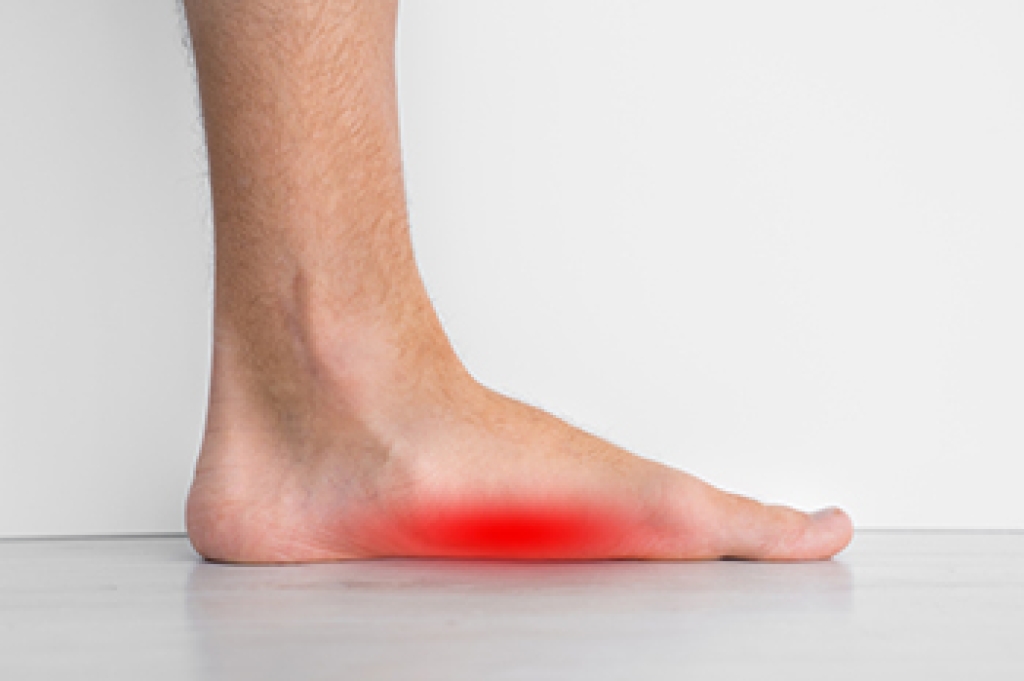
The pain that can accompany the foot condition known as flat feet may or may not affect specific people. It is described as an arch that is absent in each foot and provides shock absorption to the body. The majority of babies are born with flat feet, and the arch generally develops during the teenage years. Consequently, the arch may not develop in some people, and they can experience discomfort with flat feet as they get older. Performing specific stretches may help to strengthen the entire foot, which may help to diminish the discomfort of having flat feet. These can consist of simple stretches that are called the towel scrunch, stair heel raises, and toe extensions. Many patients enjoy practicing the towel stretch, which is done while sitting on the floor, and wrapping a towel around the feet as the toes are pointed up. Additionally, rolling the foot on a tennis ball can invoke feelings of well-being as the feet relax. If you would like additional information about effective stretches to practice with flat feet, please ask a podiatrist who can provide you with useful information.

Flatfoot is a condition many people suffer from. If you have flat feet, contact Edward Gonzalez, DPM from Lower Extremity Care. Our doctor will treat your foot and ankle needs.

What Are Flat Feet?

Flatfoot is a condition in which the arch of the foot is depressed and the sole of the foot is almost completely in contact with the ground. About 20-30% of the population generally has flat feet because their arches never formed during growth.

Conditions & Problems:

Having flat feet makes it difficult to run or walk because of the stress placed on the ankles.

Alignment – The general alignment of your legs can be disrupted, because the ankles move inward which can cause major discomfort.

Knees – If you have complications with your knees, flat feet can be a contributor to arthritis in that area.  

Symptoms

  • Pain around the heel or arch area
  • Trouble standing on the tip toe
  • Swelling around the inside of the ankle
  • Flat look to one or both feet
  • Having your shoes feel uneven when worn

Treatment

If you are experiencing pain and stress on the foot you may weaken the posterior tibial tendon, which runs around the inside of the ankle. 

If you have any questions, please feel free to contact our office located in Miami, FL . We offer the newest diagnostic and treatment technologies for all your foot care needs.

Read more about Flat Feet
scroll to top